
Few herbal formulas have generated as much fascination—and controversy—as Essiac Tea.
For nearly a century, people around the world have turned to this unique blend of herbs in search of wellness support, detoxification, immune support, and complementary care during serious health challenges. Along the way, Essiac Tea has developed a devoted following among many cancer survivors and integrative health practitioners.
Whether you’re new to Essiac Tea or have been drinking it for years, understanding the herbs behind the formula offers valuable insight into why it has remained one of the most talked-about herbal blends in alternative health history.
What Is Essiac Tea?
Essiac Tea traces its roots back to Canadian nurse Rene Caisse, who first learned about the herbal formula from a patient in the 1920s. According to the story, the woman credited the tea with helping her recover after a serious health challenge many years earlier.
Intrigued, Caisse began studying the formula and eventually devoted much of her life to sharing it with others. The name “Essiac” is simply “Caisse” spelled backward.
Over the decades, Essiac Tea gained a reputation as a traditional herbal tonic used to support cleansing, elimination, immune function, and overall wellness. Its popularity spread throughout Canada, the United States, and eventually around the world.
Today, two primary versions of Essiac Tea exist. The original formula contains four herbs, while some manufacturers—including Genuine Essiac—produce an expanded eight-herb version that incorporates additional botanicals traditionally valued for nutritional and wellness support.
Want to learn more about the history of Essiac Tea? Watch James Templeton’s interview with Bryan Paulhus of Genuine Essiac as they explore the history, preparation, and legacy of one of the most talked-about herbal formulas ever created. Watch the interview HERE.
To understand why Essiac Tea continues to attract attention nearly 100 years after its introduction, it helps to take a closer look at the herbs themselves.
The Original Four Essiac Tea Ingredients
The original Essiac Tea formula contains four herbs, each selected for its traditional role in supporting the body’s natural cleansing and healing processes.
While researchers continue to study the individual compounds found within these plants, their historical use stretches back centuries in traditional herbal medicine.
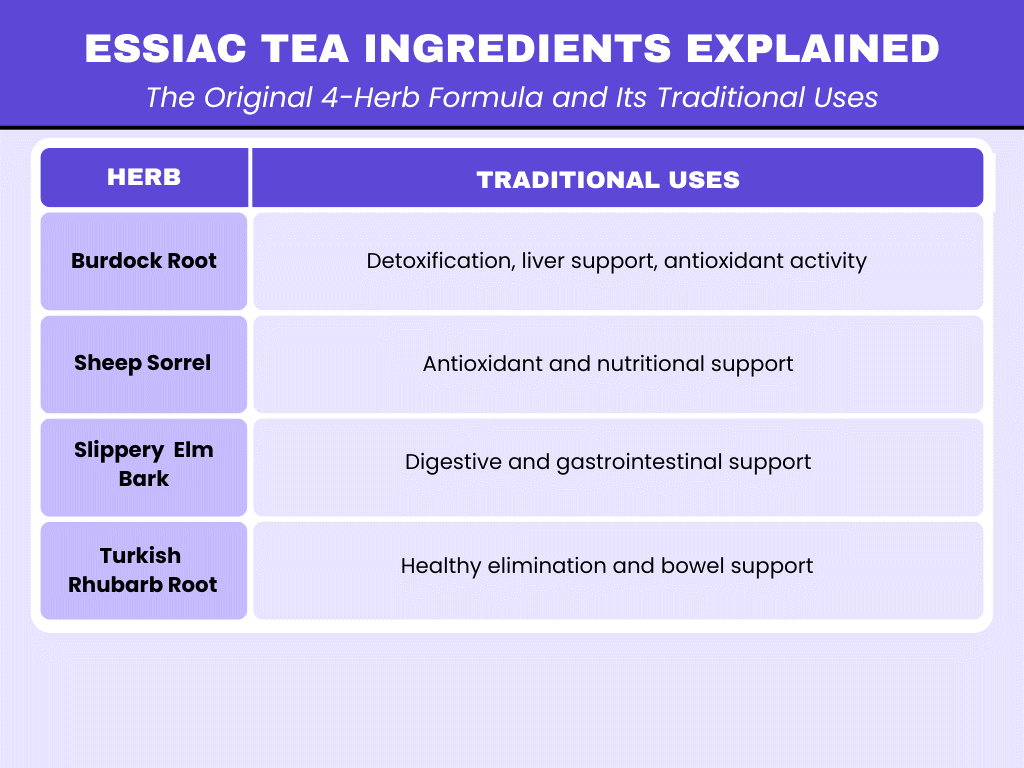
Burdock Root: The Foundation of the Formula
Burdock root is often considered the cornerstone of Essiac Tea. Used for centuries in traditional herbal medicine, it has long been associated with supporting the body’s natural detoxification pathways, particularly the liver and lymphatic system.
Burdock also contains a variety of naturally occurring plant compounds, including antioxidants that help protect cells from oxidative stress. Many herbalists regard burdock as one of nature’s premier “blood cleansing” herbs, which helps explain its prominent role in the Essiac formula.
Sheep Sorrel: The Most Discussed Ingredient
Of all the herbs in Essiac Tea, sheep sorrel may be the most talked about.
This leafy plant contains a variety of phytonutrients and antioxidant compounds that have attracted scientific interest over the years. Historically, sheep sorrel was valued for its nutritional content and its role in traditional cleansing formulas.
Because it has become so closely associated with Essiac Tea, many people specifically search for information about sheep sorrel when researching the formula.
Slippery Elm Bark: Support for the Digestive System
Slippery elm bark has a long history of use as a soothing herb.
When mixed with water, it forms a gel-like substance known as mucilage. Traditionally, this has been used to support the lining of the digestive tract and promote gastrointestinal comfort.
Its inclusion in Essiac Tea reflects the belief that healthy digestion and elimination are important components of overall wellness.
Turkish Rhubarb Root: Promoting Healthy Elimination
The fourth herb in the original Essiac formula is Turkish rhubarb root.
Historically, herbal practitioners have used rhubarb root to support healthy bowel function and elimination. By helping the body efficiently remove waste products, it was believed to complement the cleansing properties of the other herbs in the formula.
Together, these four herbs formed the foundation of the original Essiac Tea that Rene Caisse shared with patients throughout much of her career.
But the story doesn’t end there.
Over time, some practitioners began expanding the formula to include four additional herbs—creating what is now known as the 8-herb Essiac formula.
Why Some Practitioners Prefer the 8-Herb Essiac Formula
While Rene Caisse’s original formula contained four herbs, another version eventually emerged that expanded the blend to include four additional botanicals:
• Red Clover
• Watercress
• Kelp
• Blessed Thistle
Together, these herbs created what is commonly known as the 8-herb Essiac formula.
Supporters of the expanded formula believe these additional herbs provide broader nutritional support while complementing the cleansing and wellness properties of the original blend.
Red Clover
Red clover has a long history of use in traditional herbal medicine. Rich in naturally occurring plant compounds known as isoflavones, it has often been used to support healthy circulation, skin health, and the body’s natural detoxification processes.
Watercress
Often overlooked, watercress is one of the most nutrient-dense leafy greens on the planet. It contains vitamins, minerals, and antioxidant compounds that have made it a popular ingredient in traditional wellness formulas for generations.
Kelp
Kelp is a type of sea vegetable naturally rich in trace minerals, including iodine. Because minerals play essential roles in hundreds of biological processes, kelp is frequently included in nutritional support programs.
Blessed Thistle
Blessed thistle has traditionally been used to support digestion, liver health, and overall vitality. Herbalists have long valued it as a tonic herb that complements cleansing and digestive protocols.
4-Herb vs. 8-Herb Essiac Tea: What’s the Difference?
One of the most common questions people ask is whether the 4-herb or 8-herb formula is “better.”
The truth is that both versions share the same historical roots and both contain the four original herbs associated with Rene Caisse’s work.
The primary difference is that the 8-herb formula adds four additional botanicals intended to provide broader nutritional and herbal support.
Some individuals prefer to stay with the original four-herb blend, while others choose the expanded formula because they appreciate the added herbs and their traditional uses.
Ultimately, the choice comes down to personal preference and individual wellness goals.
What remains remarkable is that nearly a century after its introduction, Essiac Tea continues to inspire discussion, research, and curiosity among people seeking to learn more about natural approaches to health and wellness.
What Research Says About Essiac Tea
One reason Essiac Tea continues to generate interest nearly a century after its introduction is that researchers have spent decades attempting to understand the biological activity of its ingredients.
Laboratory studies have identified antioxidant compounds, anti-inflammatory properties, and other potentially beneficial plant constituents within the herbs that make up Essiac Tea. Researchers have also investigated whether some of these herbs may influence immune function, cellular health, and the body’s natural defense mechanisms.
However, it’s important to understand the distinction between laboratory findings and clinical outcomes.
Organizations such as the National Cancer Institute have reviewed the available research and note that while laboratory studies have produced interesting findings, well-designed human clinical trials remain limited.
That said, many people continue to use Essiac Tea as part of a broader wellness strategy, often alongside healthy lifestyle habits, nutritional support, and integrative approaches to health.
Why Interest in Essiac Tea Has Endured
If the scientific evidence remains limited, why has Essiac Tea remained so popular for nearly 100 years?
Part of the answer lies in its remarkable history.
Over the decades, countless individuals have shared personal stories about incorporating Essiac Tea into their wellness routines. While personal testimonials do not replace scientific evidence, they have undoubtedly contributed to the formula’s enduring reputation.
Another reason is the simplicity of the formula itself. Unlike many modern supplements, Essiac Tea is made from a relatively small number of herbs that have long histories of traditional use.
And perhaps most importantly, Essiac Tea continues to appeal to people who are interested in supporting the body’s natural healing processes through nutrition, herbal medicine, and lifestyle choices.
Whether viewed as a traditional herbal tonic, a wellness tea, or a fascinating chapter in alternative health history, Essiac Tea remains one of the most enduring herbal formulas ever created.
The Legacy of Rene Caisse Lives On
Nearly a century after Rene Caisse first began sharing Essiac Tea, her legacy continues to spark curiosity around the world.
What began as a simple herbal formula passed along through traditional knowledge has evolved into one of the most recognized herbal blends in alternative health history. Along the way, Essiac Tea has attracted supporters, skeptics, researchers, practitioners, and countless individuals seeking to better understand its place in the wellness landscape.
Part of that legacy was carried forward by Dr. Charles Brusch, personal physician to President John F. Kennedy and one of Rene Caisse’s closest associates. Dr. Brusch remained a strong advocate of the original 8-herb formula and worked to preserve its availability for future generations.
Today, that mission continues through individuals like Bryan Paulhus, owner of Genuine Essiac for more than two decades. Personally trained by Dr. Brusch, Bryan has dedicated much of his career to educating people about the history, preparation, and traditional use of the original 8-herb formula.
That’s one reason James Templeton recently sat down with Bryan for a fascinating conversation about Essiac Tea, its origins, the differences between 4-herb and 8-herb formulas, and why this remarkable herbal blend continues to attract attention nearly 100 years after its introduction.
The Bottom Line
Essiac Tea remains one of the most enduring and widely discussed herbal formulas in the world.
Whether you’re interested in its history, its ingredients, its traditional uses, or the personal stories that surround it, understanding the herbs behind the formula provides valuable insight into why Essiac Tea has fascinated people for nearly a century.
Explore the herbs. Learn the history. And decide for yourself what makes Essiac Tea one of the most talked-about herbal formulas of all time
Frequently Asked Questions About Essiac Tea
What is the difference between 4-herb and 8-herb Essiac Tea?
The 4-herb formula contains the original herbs associated with Rene Caisse’s work. The 8-herb formula includes those same four herbs plus red clover, watercress, kelp, and blessed thistle. Supporters of the expanded formula believe the additional herbs provide broader nutritional and herbal support.
What does burdock root do in Essiac Tea?
Burdock root has traditionally been used to support the body’s natural detoxification pathways, particularly the liver and lymphatic system. It also contains naturally occurring antioxidant compounds that help protect cells from oxidative stress.
Why is sheep sorrel considered important?
Sheep sorrel is one of the most discussed ingredients in Essiac Tea. Historically, it has been valued for its nutritional content and antioxidant properties, and it remains one of the herbs most commonly associated with the Essiac formula.
Is Genuine Essiac the same as other Essiac tea products?
Not always. While many products contain the original four herbs, Genuine Essiac is known for using the traditional 8-herb formula that was championed by Dr. Charles Brusch. Consumers interested in Essiac Tea should always review ingredient labels to understand which version they are purchasing.