
For years, one of the loudest voices warning about Candida has been my friend Doug Kaufmann (you can listen to my interview with him HERE). Through his television program, books, and lectures, Doug has challenged millions of people to think differently about fungi and chronic disease.
Long before most people were talking about the microbiome or fungal overgrowth, Doug was asking an important question:
Could Candida be affecting our health in ways we don’t yet fully understand?
According to the Oral Cancer Foundation, “yeast infections such as Candida were recognized centuries ago as an indicator of much larger underlying diseases such as diabetes mellitus, malignant tumors, and chronic infections.”
Years ago, while working with clients and performing live blood analyses, I frequently observed signs of Candida overgrowth. That observation stayed with me for years. Then, as I began interviewing cancer survivors from around the world, I noticed something else.
The body usually whispers before it screams.
· Persistent fatigue.
· Recurring sinus infections.
· Digestive problems.
· Brain fog.
· Sugar cravings.
· Repeated yeast infections.
· Thrush.
· Toenail fungus.
None of these symptoms automatically point to cancer. But they may suggest that something deeper is affecting the body’s natural balance.
That’s why I’ve often wondered whether Candida is less of a villain… and more of a messenger. A warning sign that the immune system is struggling, inflammation is smoldering beneath the surface, or the body’s microbial balance has shifted in the wrong direction.
What Exactly Is Candida?
Before we can talk about Candida and cancer, it’s important to understand one simple fact:
Candida isn’t your enemy until the balance changes.
Candida albicans is a naturally occurring yeast that lives in the mouths, digestive tracts, skin, and other mucosal surfaces of many healthy people. Under normal circumstances, beneficial bacteria, a healthy immune system, and the body’s natural defenses keep it under control.
Problems arise when that delicate balance is disrupted.
Antibiotics, steroid medications, chemotherapy, a weakened immune system, uncontrolled blood sugar, chronic stress, poor diet, and other health challenges can all tip the balance in Candida’s favor. When that happens, a normally harmless yeast can multiply beyond healthy levels and contribute to problems such as oral thrush, recurring yeast infections, digestive complaints, skin issues, and, in more severe cases, invasive infections.
To me, the question isn’t whether Candida belongs in the body—it does.
The more important question is what allowed it to overgrow in the first place?
How to Recognize If You Have Candida or Yeast Overgrowth
Candida often gives you clues that something isn’t quite right.
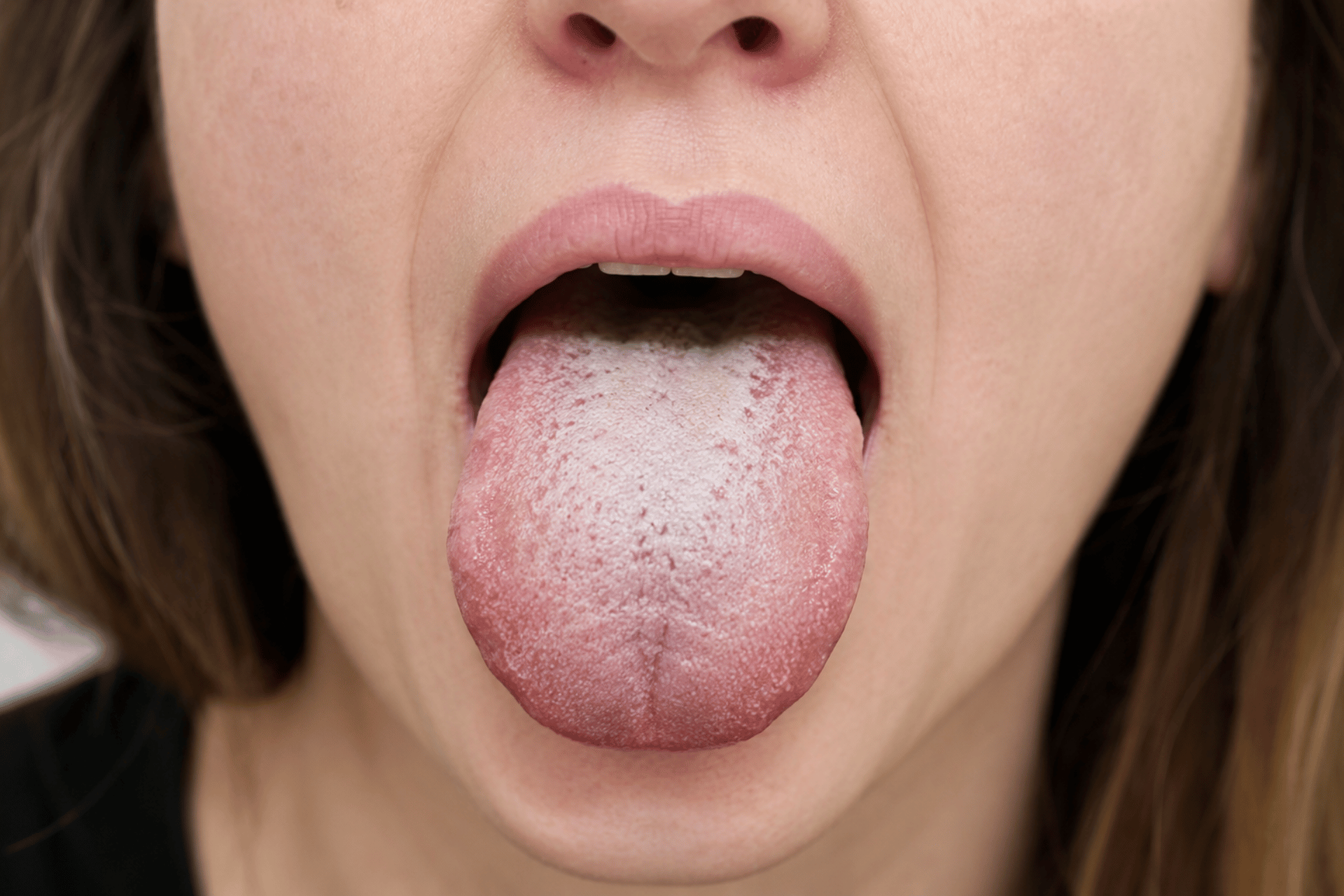
One of the most common signs is oral thrush—creamy white patches that appear on the tongue, inside the cheeks, or in the back of the throat. The corners of the mouth may also become cracked, sore, or slow to heal.
Some people notice a burning mouth, an unusual taste, or discomfort when swallowing. Others experience recurring yeast infections, digestive problems, or persistent fatigue.
Most Candida infections are more of a nuisance than a serious threat. But in people with severely weakened immune systems, Candida can spread beyond the mouth and digestive tract into other parts of the body. When that happens, it becomes a serious medical condition that requires immediate treatment.
According to the Oral Cancer Foundation, Candida can spread beyond the mouth and digestive tract in severely immunocompromised individuals. When it enters the bloodstream (Candida sepsis), it becomes a life-threatening condition that requires immediate treatment. That’s why I believe Candida shouldn’t be dismissed. It may be one of your body’s earliest warning signs that something deeper needs attention.
Can Candida Cause Cancer?
One of the strongest links between Candida and cancer is chronic inflammation.
When Candida is allowed to flourish or grow unchecked, it can stimulate a prolonged immune response. Over time, chronic inflammation may damage tissues, interfere with normal cell repair, and create conditions that are more favorable for disease. Scientists have long recognized chronic inflammation as one of the hallmarks of many cancers.
As just one example, a study published in Biomed Research International (2021) concluded that Candida albicans may promote oral cancer development through several mechanisms, particularly by increasing chronic inflammation.
Acetaldehyde: A Potential Carcinogen. Candida can also produce acetaldehyde, a toxic byproduct formed during the metabolism of sugars and alcohol. Acetaldehyde has been classified as a carcinogen in certain settings because it can damage DNA and interfere with normal cellular repair mechanisms. Researchers are investigating whether prolonged exposure to acetaldehyde produced by Candida may contribute to cancers of the mouth, throat, and digestive tract, particularly in people with persistent oral Candida infections.
Biofilms: Candida’s Protective Shield. Candida is remarkably adaptable. Rather than floating freely, it often forms biofilms—sticky, protective communities that allow yeast cells to cling to tissues while shielding themselves from the immune system and antimicrobial treatments. Biofilms have become a major focus of medical research because they can contribute to persistent infections, ongoing inflammation, and immune dysfunction.
A Marker of an Unhealthy Terrain
Perhaps the most intriguing possibility is that Candida isn’t the primary problem at all.
Instead, it may simply be one of the first visible signs that the body’s internal terrain has changed, the “canary in the coal mine.”
· A weakened immune system.
· Poor blood sugar control.
· An unhealthy microbiome.
· Chronic stress.
· Nutrient deficiencies.
· Repeated antibiotic use.
All of these factors can encourage Candida overgrowth—and many of them have also been associated with an increased risk of chronic disease.
That’s why I believe it’s often more important to ask why Candida is thriving.
How to Prevent Candida Overgrowth Naturally
Diet is one of the first places I look.
Yeast thrives on sugar, so reducing added sugars, sweets, sugary beverages, and highly refined carbohydrates can deprive it of one of its favorite food sources.
Foods to Eat and Avoid on An Anti-Candida Diet
| Foods to Limit | Foods to Enjoy |
|---|---|
| Refined sugars and sweets | Non-starchy vegetables |
| Refined carbohydrates (white bread, pastries, white pasta) | Lean proteins (fish, poultry, eggs) |
| Refined grains | Nuts and seeds |
| High-glycemic foods | Low-glycemic fruits (berries, lemons, and limes) |
| Alcohol | Healthy fats (avocado, coconut, olive oil) |
| Ultra-processed foods | Herbs, spices, garlic, onions, and whole foods |
Many integrative practitioners recommend following an anti-Candida diet for two to three months to help reduce yeast overgrowth. The goal isn’t to starve yourself—it’s to deprive Candida of its preferred fuel while nourishing your body with whole, nutrient-dense foods.
I believe this approach should be a priority, especially for people facing cancer, because both Candida and cancer cells tend to thrive in a high-sugar environment. My preferred approaches include Doug Kaufmann’s anti-fungal diet and Ann Louise Gittleman’s Fat Flush Diet – phase 1.
Bottom Line
Over the past 40+ years, I’ve learned that the body usually whispers before it screams for attention.
Candida may be one of those whispers. Whether it’s contributing to chronic inflammation, reflecting an imbalance in the microbiome, or simply signaling that the immune system is under stress, I believe it’s worth paying attention to.
If Candida is a concern, don’t overlook one of the simplest places to start: your diet. Reducing sugar intake and refined carbohydrates while following an anti-Candida eating plan for a few months may help create an internal environment in which yeast is far less likely to thrive.
See also:
Candida and Cancer: The Proof is in the Blood
Candida: Cancer’s Canary In The Coal Mine
Resources include:
Verma R, Saxena P, Khan LA. The trio of Candida albicans, immune cells, and cancer progression: a complex interplay driving tumorigenesis. Med Oncol. 2025 Oct 22;42(11):527. doi: 10.1007/s12032-025-03089-2. PMID: 41125844.
Li J, Zhang C, Huang X, Sun H, Yang L, Liu H, Zhang L, Wu N, Xie Y, Qi J, Leng X, Cui Y, Li S, Kang Z, Kou Z, Liu NN, Lan P, Xuan B, Cao D, Cai GX, Chen Y, Chen J, Liu Z, Ginhoux F, Chen C, Su B, Fang JY. Candida albicans synergizes with Fusobacterium nucleatum in colorectal cancer progression via the Flo9-RadD interaction. Cancer Cell. 2026 May 11;44(5):1063-1079.e8. doi: 10.1016/j.ccell.2026.02.001. Epub 2026 Feb 26. PMID: 41759520.
Muzio LL, Ballini A, Cantore S, Bottalico L, Charitos IA, Ambrosino M, Nocini R, Malcangi A, Dioguardi M, Cazzolla AP, Brauner E, Santacroce L, Cosola MD. Overview of Candida albicans and Human Papillomavirus (HPV) Infection Agents and their Biomolecular Mechanisms in Promoting Oral Cancer in Pediatric Patients. Biomed Res Int. 2021 Nov 2;2021:7312611. doi: 10.1155/2021/7312611. PMID: 34765678; PMCID: PMC8577934.